By: Surinder Jain.
The Hindu festival of Sharad Navratri, also known as Maha Navratri, is a major annual celebration that spans over 9 nights and 10 days. In 2024, Sharad Navratri will be observed from September 25 to October 4.
Significance:
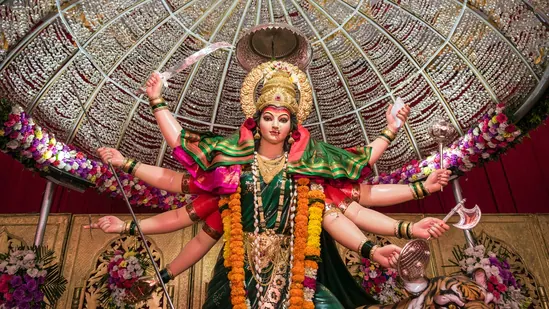
Sharad Navratri holds immense religious and cultural significance in Hinduism. It is a celebration of the divine feminine energy, known as Shakti or Devi, and her nine forms. The festival honors the victory of good over evil, as depicted in the mythological battle between Goddess Durga and the buffalo demon Mahishasura3.
History:
The origins of Navratri can be traced back to ancient Hindu scriptures like the Puranas and the epics Ramayana and Mahabharata. The festival is believed to have been celebrated since time immemorial, with references found in texts dating back to the 7th century CE4.
Celebration:
Hindus celebrate Navratri to honor the divine feminine energy and seek blessings from the various forms of the Mother Goddess. The festivities involve worshipping Durga, Lakshmi, and Saraswati, the three primary manifestations of the divine feminine3.
Different Celebrations across India:
- In the eastern and northeastern regions, Navratri is celebrated as Durga Puja, with grand pandals (temporary structures) erected for worshipping the goddess3.
- In the northern and western parts, the festival is marked by fasting, performing rituals, and celebrating the victory of Lord Rama over Ravana through Ramlila performances3.
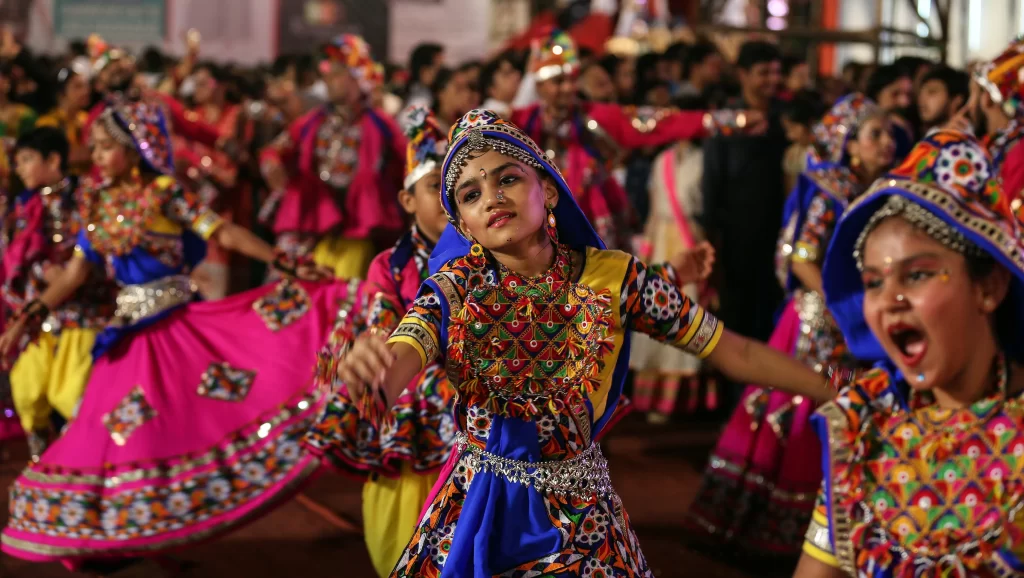
- In Gujarat and parts of western India, Navratri is celebrated with vibrant Garba and Dandiya Raas dances4.
- In South India, the festival is celebrated as Golu or Bommai Kolu, where dolls and figurines are arranged and worshipped4.
Traditional Foods:
Traditional foods prepared during Navratri include fasting dishes like sabudana khichdi, kuttu atta preparations, and various milk-based sweets like panjiri and malpua[Knowledge].
Rituals and Customs:
Key rituals and customs include fasting, worshipping the goddess through pujas and aarti, performing Garba and Dandiya Raas dances, enacting Ramlila, and immersing the idol of the goddess on the final day (Vijayadashami)34.
Celebration in Australia:
Navratri is celebrated by the Indian diaspora in Australia, particularly in cities with a significant Hindu population. Hindu temples, cultural associations, and community centers organize events, pujas, and cultural programs to mark the occasion[Knowledge].
The Hindu Council of Australia likely facilitates or participates in Navratri celebrations organized by local Indian associations and temples across major Australian cities[Knowledge].To join the celebrations in Australia, one can visit local Hindu temples, community centers, or participate in events organized by cultural associations, especially in areas with a sizable Indian community[Knowledge]

