By: Surinder Jain.
Raksha Bandhan is a traditional Hindu festival celebrated on the full moon day of the Hindu month of Shravana, which typically falls in August. In 2024, Raksha Bandhan will be celebrated on Monday, August 19. 2467.
The significance of Raksha Bandhan lies in its name, which translates to “the bond of protection.” The festival celebrates the love and duty between brothers and sisters. On this day, sisters tie a sacred thread called ‘Rakhi’ around their brothers’ wrists, praying for their long lives and prosperity. In return, brothers vow to protect their sisters from all harm and trouble, reinforcing the bond they share134.
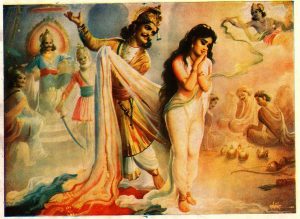
The history of Raksha Bandhan is rooted in ancient Hindu scriptures and epics. One popular legend involves Lord Krishna and Draupadi from the Mahabharata. When Krishna cut his finger, Draupadi tore a piece of her saree and tied it around his finger to stop the bleeding. Krishna, in turn, promised to protect her, which is considered one of the earliest instances of the Rakhi bond. Other historical tales include the story of Rani Karnavati and Emperor Humayun, where the queen sent a rakhi to the emperor, seeking his protection46.
The story of Lord Krishna and Draupadi is one of the popular mythological origins of Raksha Bandhan. According to this tale, Krishna cut his finger while handling sugarcane, and Draupadi, who felt as close to Krishna as she would have to an actual brother, tore off a piece of her sari and wrapped it around his wound. Surprised and moved by her gesture, Krishna vowed to protect her and return the favor to her sometime in the future2.
Another popular origin story involves King Porus and his wife Roxana. During the Battle of the Hydaspes River, King Porus saw the rakhi on his wrist, which reminded him of his promise to Roxana. He then stopped himself from attacking Alexander the Great, who was invading India at the time. Porus lost the battle, but he won Alexander’s respect and honor, and he was reinstated as a governor of his own kingdom1.These stories and many others have been passed down through generations and inspire millions of modern-day Indians to display their gratitude for friends and family in the form of a ritual that has become an integral part of Indian culture2.
Hindus celebrate Raksha Bandhan to honor the cherished bond between brothers and sisters. It is a day that emphasizes the values of love, care, and protection among siblings4.Traditional foods prepared during Raksha Bandhan vary by region but often include sweets like kheer, laddoos, and barfis, which are shared among family members to celebrate the occasion[Knowledge].The rituals and customs of Raksha Bandhan start with sisters preparing the Rakhi thali, which includes the rakhi threads, sweets, diya (lamp), and sometimes rice and roli for the tilak. Sisters tie the rakhi on their brothers’ wrists, apply tilak, perform aarti, and pray for their well-being. Brothers, in return, pledge their protection and may offer gifts or money as a token of their love145.
The rituals and customs associated with Raksha Bandhan include the following:
- Aarti and Tilak: Sisters perform an aarti, a prayer ritual, and apply tilak on their brothers’ foreheads14.
- Rakhi Tying: Sisters tie a sacred thread called Rakhi around their brothers’ wrists, symbolizing their prayers for their brothers’ well-being and protection5.
- Sweets and Gifts: Sisters offer sweets and brothers may give gifts to show their love and affection14.
- Pooja: Sisters perform a sacred pooja before tying the Rakhi, using a diya and thali that contains a red Tilak, raw rice, areca nut, a sweet, and the Rakhi itself4.
- Lumba Rakhi: In Rajasthan, the lumba rakhi is tied to the sister-in-law, symbolizing her acceptance into the family and her commitment to supporting her husband in protecting his sister5.
- Community Unity: Raksha Bandhan is celebrated to unite different communities and cultures, promoting universal brotherhood among people5.
These rituals and customs vary slightly across different regions in India, but they all reflect the importance of the bond between brothers and sisters and the desire for their protection and well-being.
Tying a Rakhi on the wrist during Raksha Bandhan has significant meaning and symbolism. The Rakhi is a sacred thread that represents protection and commitment between brothers and sisters. The custom of tying the Rakhi on the right wrist is considered auspicious and symbolizes the brother’s strength and protection. In Hindu tradition, the right side of the body is associated with strength and dexterity, making it a fitting choice for tying the Rakhi, which signifies a brother’s strength and protection2.The Rakhi is not only a symbol of protection but also a mark of respect and love between siblings. The act of tying the Rakhi on the wrist is believed to create a sacred environment, symbolizing humility and respect towards the tradition2.In some traditions, tying the Rakhi on the left wrist is considered inauspicious3. The choice of the right wrist is based on the belief that it has a positive and auspicious significance3.The Rakhi is a tangible reminder of the bond between brothers and sisters, and tying it on the wrist is a way of expressing love, protection, and commitment3.
Raksha Bandhan is celebrated with much enthusiasm across India and among the Indian diaspora worldwide, including in Australia. The festival is marked by cultural programs, community gatherings, and special events organized by Indian communities and cultural associations[Knowledge].In Australia, major cities with significant Indian populations, such as Sydney, Melbourne, Brisbane, Perth, and Adelaide, host Raksha Bandhan celebrations. These events are often organized by Indian cultural organizations, temples, and community centers. To join the celebrations in Australia, one can visit local Indian community centers, Hindu temples, or participate in events organized by cultural associations that celebrate Indian festivals. These venues often advertise their events in advance, especially in areas with a large Indian community.

