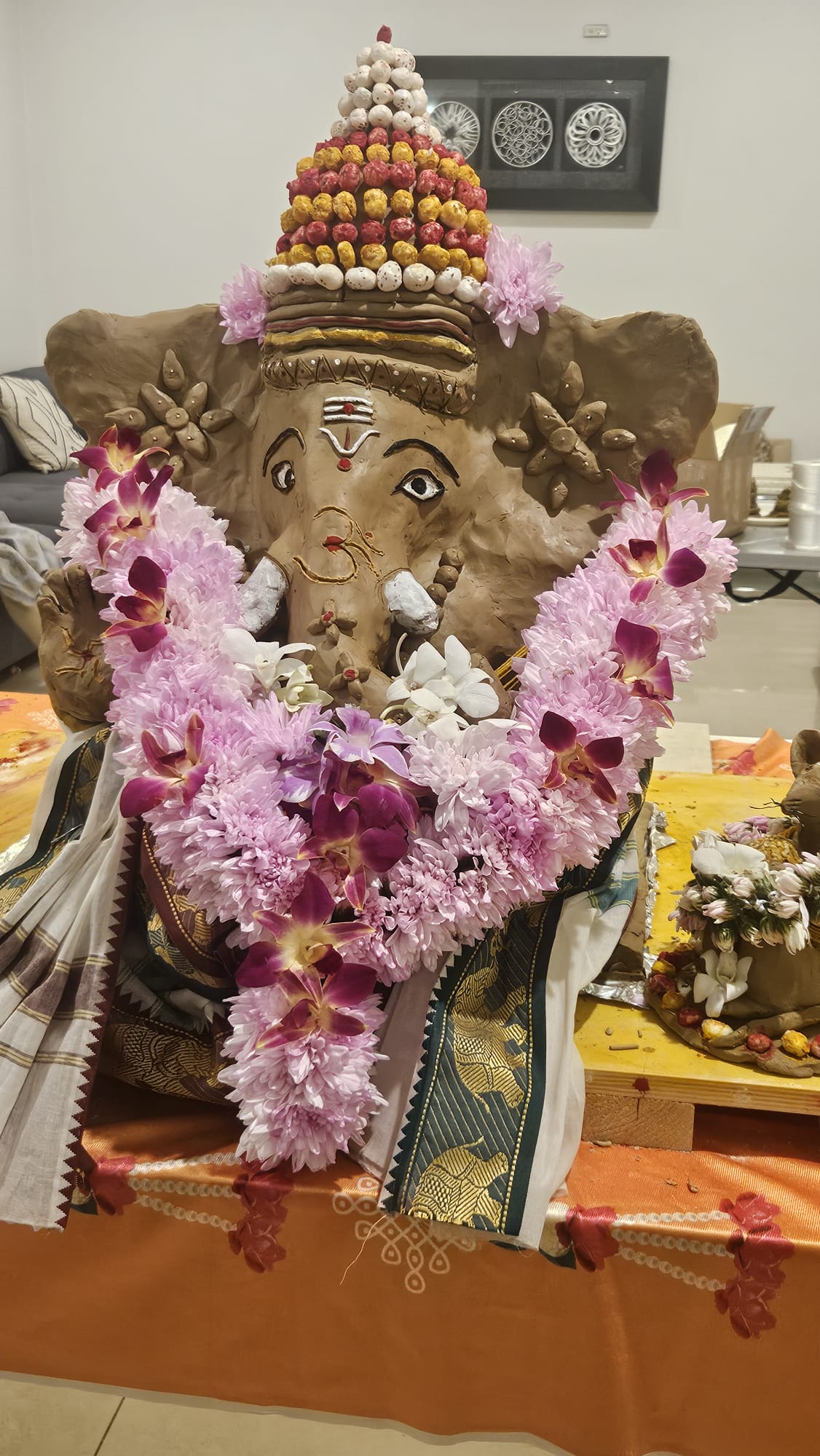
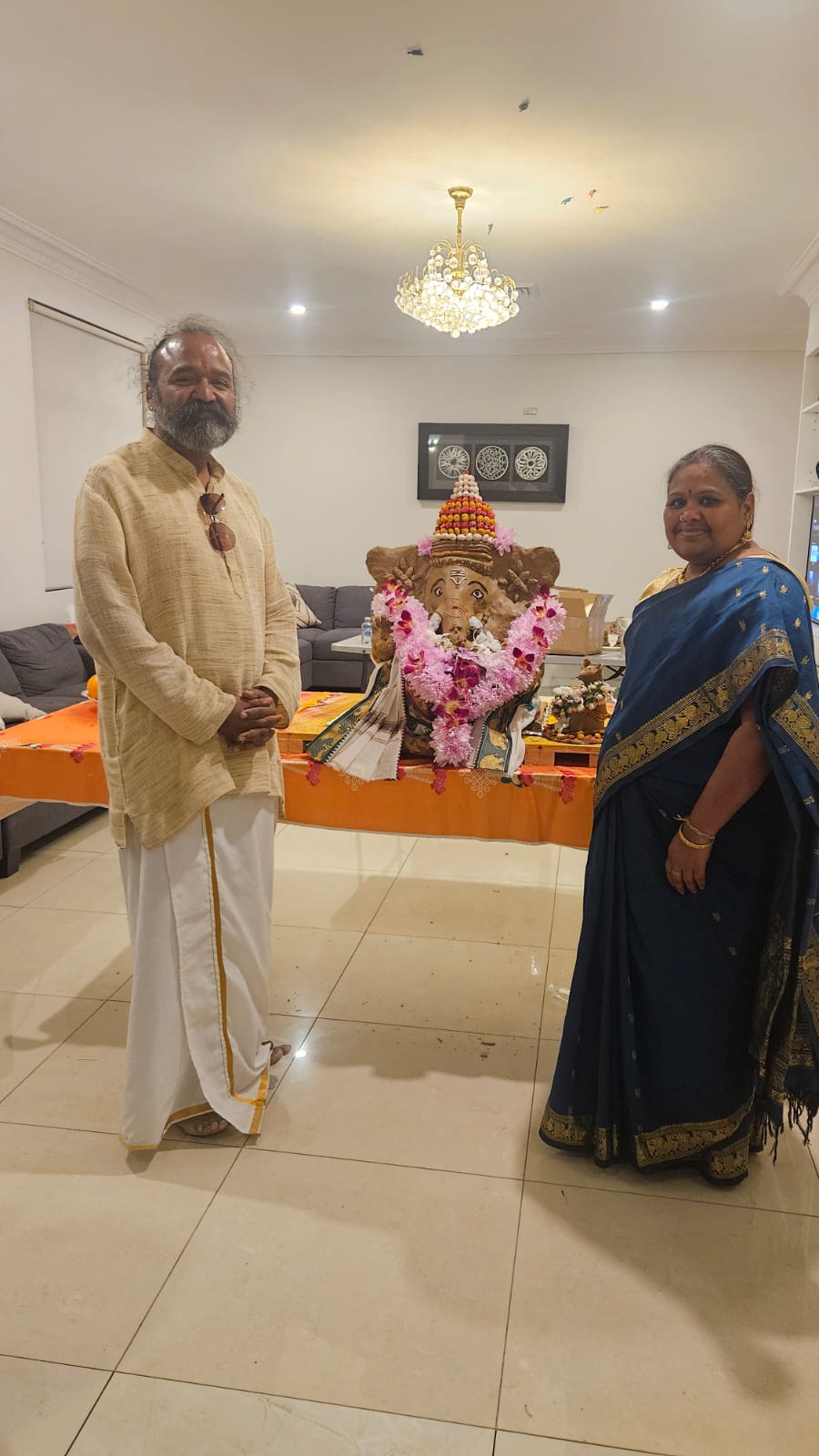
By: Surinder Jain.
Ganesh Chaturthi, also known as Vinayaka Chaturthi or Vinayagar Chaturthi, is a Hindu festival that celebrates the birth of Lord Ganesha, the elephant-headed deity revered as the remover of obstacles and the god of wisdom and prosperity.This year, Ganesh Chaturthi will be celebrated from September 19 to September 28, 2024. The festival begins on Chaturthi Tithi (fourth day) of the Hindu lunar month of Bhadrapada4.
Significance
The festival holds immense spiritual and cultural significance for Hindus. Lord Ganesha, the son of Lord Shiva and Goddess Parvati, is believed to bless his devotees with wisdom, success, and good fortune. Devotees seek Lord Ganesha’s blessings before starting any new endeavor, exam, wedding, or job4.
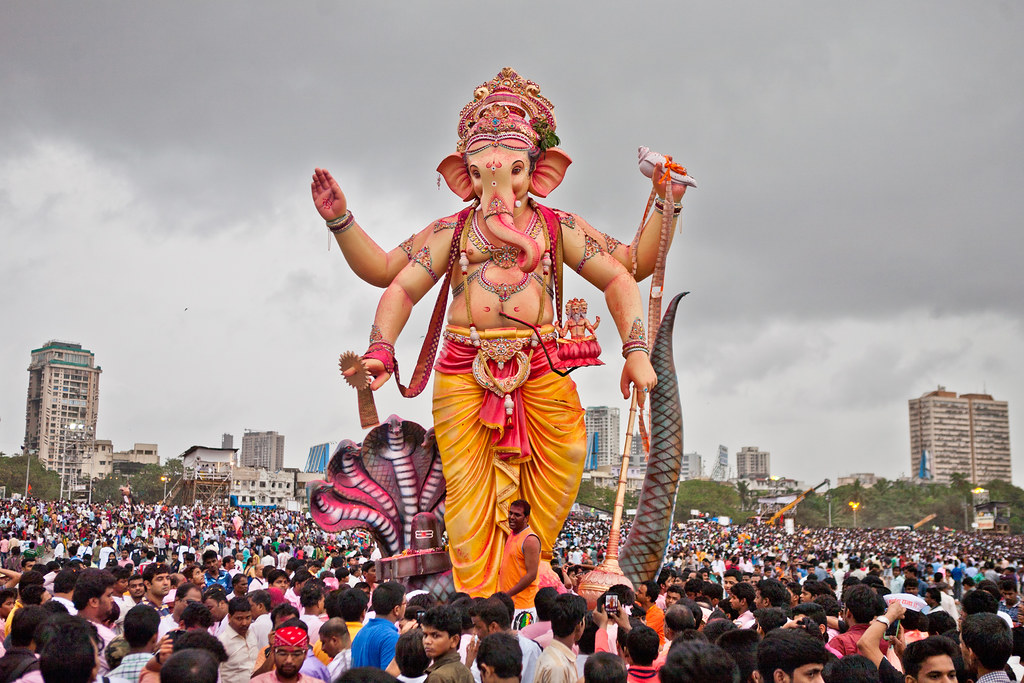
The festival of Ganesh Chaturthi holds immense cultural and spiritual significance for Hindus:
- Celebration of Lord Ganesha: The festival celebrates the birth of Lord Ganesha, the elephant-headed deity revered as the remover of obstacles, the god of wisdom, and the bestower of prosperity13. Devotees seek his blessings before starting any new endeavour, exam, wedding, or job.
- Remover of Obstacles: Lord Ganesha is worshipped as the Vighnaharta, the remover of obstacles3. The festival signifies the removal of hurdles and the beginning of new ventures with Ganesha’s blessings.
- Wisdom and Knowledge: As the god of wisdom and intellect, the festival emphasizes the importance of education and learning1. Many educational institutions conduct special prayers and events during this time.
- Unity and Social Bonding: Ganesh Chaturthi is celebrated with fervour and enthusiasm by people of various communities, castes, and backgrounds, promoting unity and social bonding1.
- Cultural Heritage: The festival showcases India’s rich cultural heritage through traditional crafts, music, dance, and performances1. It supports local artisans and preserves ancient skills and techniques.
- Environmental Awareness: In recent years, there has been a growing emphasis on eco-friendly celebrations, using clay idols that dissolve in water and natural materials for decorations1.
- Promotion of Values: Lord Ganesha’s qualities—wisdom, humility, kindness, and the ability to remove obstacles—serve as a source of inspiration for individuals to embody these values1.
- National Integration: The festival gained prominence during the freedom movement, when it was used as a platform to unite people against British rule, adding to its cultural significance1.
Overall, Ganesh Chaturthi is a celebration of faith, cultural diversity, artistic expressions, shared values, and the preservation of cultural heritage1.
History
The origin of Ganesh Chaturthi remains unknown, but it gained popularity after the public celebration was initiated by the freedom fighter Lokmanya Bal Gangadhar Tilak in Maharashtra in 1893. It was a means to form a “Hindu nationalist identity” and rebel against British rule2.
The history behind the celebration of Ganesh Chaturthi can be traced back to ancient times, but the way it is celebrated today has evolved over the years. Here are some key points about the history of this festival:
- Origins in Hindu Scriptures: The festival finds mentions in ancient Hindu texts like the Rigveda, Grhya Sutras, Vajasaneyi Samhita, Yajnavalkya Smriti, and the Mahabharata, where Lord Ganesha is referred to as Ganapati, Vinayaka, and Ganesha2.
- Mythological Stories: Various mythological stories are associated with the origin of Ganesh Chaturthi, the most popular being the tale of how Lord Ganesha was created by Goddess Parvati and later got his elephant head from Lord Shiva1.
- Public Celebration by Shivaji: The public celebration of Ganesh Chaturthi gained prominence during the reign of the Maratha ruler Chhatrapati Shivaji in the 17th century1.
- Lokmanya Tilak’s Contribution: The festival was later popularized by the freedom fighter Lokmanya Bal Gangadhar Tilak in the late 19th and early 20th centuries as a means to form a “Hindu nationalist identity” and rebel against British rule12.
- Cultural Significance: Tilak transformed Ganesh Chaturthi from a private celebration into a grand public event, using it as a platform to unite people against colonial rule and promote cultural values14.
- Natural Origins: The festival’s origins can also be traced back to ancient times when people lived near rivers and worshipped the fertile soil deposited by the monsoon waters, giving it the form of Lord Ganesha3.
So while the worship of Lord Ganesha has been prevalent since ancient times, the public celebration of Ganesh Chaturthi as we know it today gained momentum during the Maratha and British colonial periods, becoming a symbol of cultural identity, unity, and resistance against foreign rule124.
Celebration
Hindus celebrate Ganesh Chaturthi to honour Lord Ganesha and seek his blessings. Clay idols of Ganesha are installed in homes and public pandals (temporary structures) for worship. Rituals like Prana Pratishta (invoking Ganesha’s presence), Shodashopachara (16-step worship), and Uttarpuja (bidding farewell) are performed3. Traditional foods like modak (sweet dumplings), which are believed to be Lord Ganesha’s favourite, are prepared and offered as prasad (blessed food)2. The festival culminates with Ganpati Visarjan, where the idols are carried in a public procession with music and chanting, then immersed in a nearby water body, symbolizing Ganesha’s return to his celestial abode23.
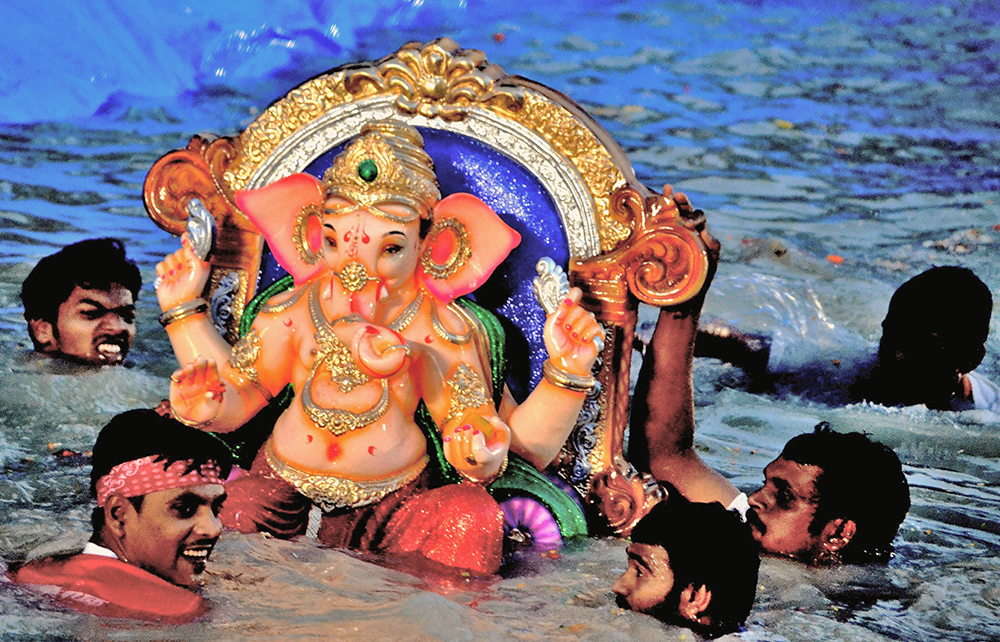
The Ganesha Visarjana or immersion of the Ganesha idol at the end of the Ganesh Chaturthi festival holds significant spiritual and symbolic meaning:
- Cycle of Creation and Dissolution: The immersion ritual symbolizes the cycle of creation and dissolution in the universe. Just as the clay idol was created and worshipped for 10 days, it is ultimately dissolved in water, representing the temporary nature of the physical world and the eternal cycle of birth and death13.
- Detachment from Material World: By immersing the idol, devotees are reminded to let go of material attachments and focus on spiritual pursuits. It signifies the importance of detaching from worldly possessions and desires, which are temporary1.
- Return to the Divine: The immersion ritual represents Lord Ganesha’s return to his celestial abode after his symbolic stay on Earth during the festival. It is believed that after receiving the prayers and blessings of devotees, Lord Ganesha returns to the divine realm3.
- Purification and Renewal: The immersion in water is seen as a purification ritual, cleansing the environment and the devotees’ minds. It also symbolizes the renewal of faith and the beginning of a new spiritual journey1.
- Unity and Harmony: The public immersion processions and celebrations foster a sense of unity, harmony, and community bonding among devotees from diverse backgrounds4.
- Environmental Awareness: In recent times, the immersion ritual has also become a means to promote environmental awareness, with many communities using eco-friendly, biodegradable idols to minimize water pollution[Knowledge].
The Ganesha Visarjana is not just a ritual but a profound spiritual experience that reminds devotees of the impermanence of the material world and the importance of focusing on spiritual growth, detachment, and harmony with nature and the divine13.
Celebration in Australia
Ganesh Chaturthi is celebrated by the Hindu diaspora worldwide, including in Australia. Major cities with significant Indian populations, such as Sydney, Melbourne, Brisbane, Perth, and Adelaide, host celebrations organized by Indian cultural associations and temples.
HCA attended and participated in the Ganesha making event of Telugu Sandadi over the weekend.